

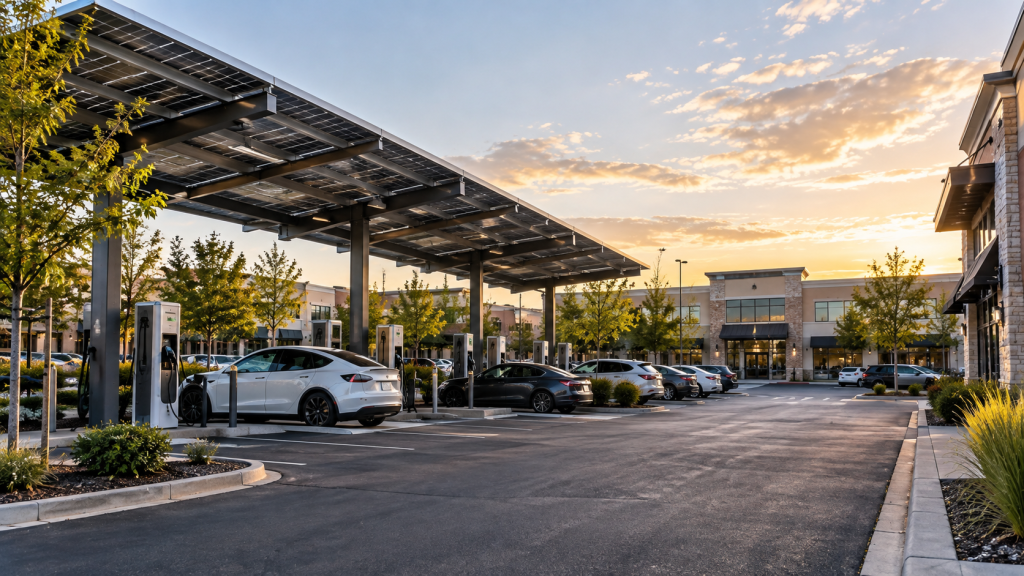
Energy strategy used to sit near the bottom of the priority list for most commercial property owners. That has changed. Renewable energy stopped being an environmental aspiration a while ago and turned into a budget question, and commercial solar has worked its way into the operating plan rather than the wish list.
Three things are driving the shift: better technology, changing policy, and a grid that keeps reminding everyone how fragile it can be. Knowing where the industry stands today is useful. Knowing where it is headed is more useful. Here is what is shaping solar PV right now, and what organizations can do with it.
Emerging Trends in Solar Technology
For years, progress in solar looked like small annual gains in efficiency and small annual drops in cost. 2026 is different. Several technologies are maturing at the same time, which opens up deployment options that were not practical even a few years ago.
Higher Module Efficiency and the Rise of Bifacial
Traditional silicon cells are running into their theoretical efficiency ceiling. The industry’s answer has been new materials and new cell structures.
Bifacial modules are the clearest example. They capture sunlight on the front and the back of the panel, picking up light that reflects off the ground (albedo). On ground-mounted commercial projects they are now the default, and depending on site conditions they can lift energy yield anywhere from 5% to 30% without adding a single square foot to the array.
Tandem cells are next in line. These stack silicon with a perovskite layer to capture a wider slice of the solar spectrum, and they are moving out of the lab and into pilot production. For a property owner working with a fixed amount of roof space, that kind of efficiency gain can be the difference between a project that pencils out and one that does not.
Storage Is Part of the System Now
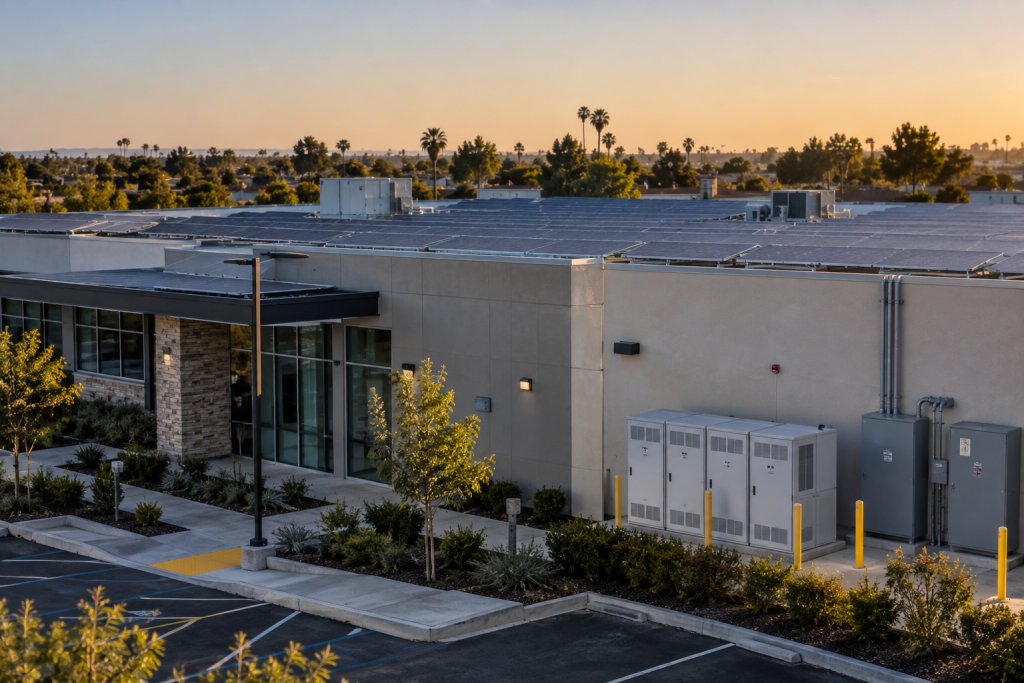
The conversation has moved from “solar” to “solar-plus-storage,” and for good reason. Utility rate structures have gotten more aggressive about time-of-use pricing and demand charges. A standalone solar PV system does not always capture the full savings sitting on the table.
Battery Energy Storage Systems (BESS) close that gap. Store the excess generation from midday, discharge it when rates peak in the late afternoon, and the demand charge comes down. Peak shaving on its own is now the main financial argument behind a lot of commercial projects.
Then there is resilience. Outages have gotten more frequent and more expensive. A system that can island from the grid and keep critical loads running turns an energy asset into part of the business continuity plan.
Software Is Doing More of the Work
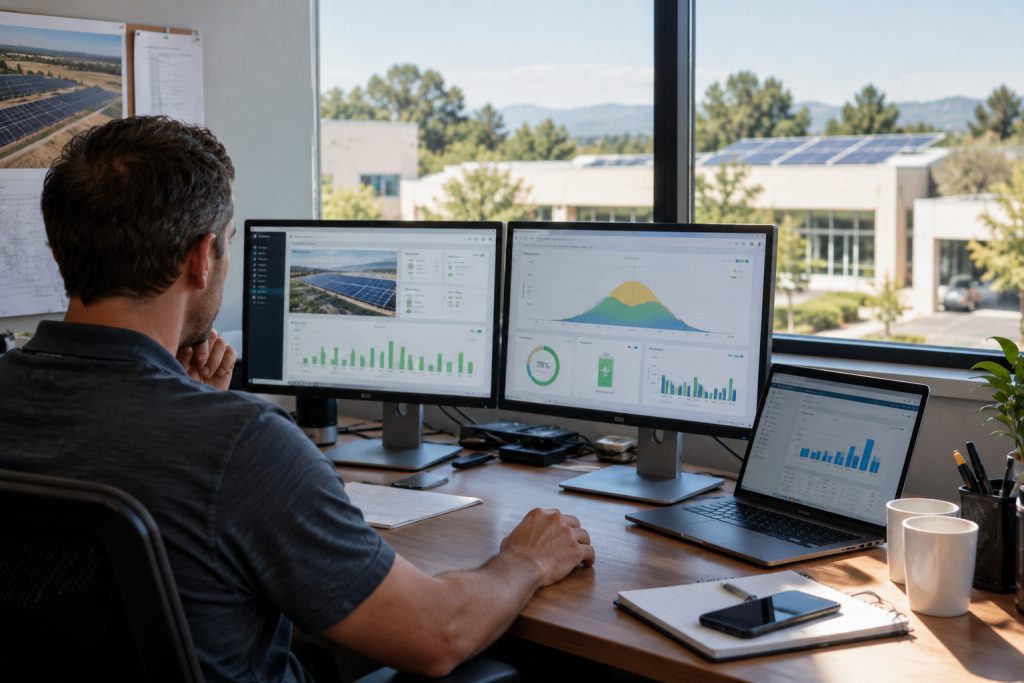
Hardware gets the attention, but a lot of the recent gains have come from software. Smart inverters and energy management systems now forecast weather, read consumption patterns, and schedule battery dispatch on their own.
For a manufacturing plant or a school campus, the practical effect is simple. The system decides, minute by minute, whether to pull from the grid, the array, or the battery. Nobody has to sit and watch a dashboard to make it happen.
How Businesses Can Stay Ahead
Technology is only half of it. The organizations getting the most out of these systems are the ones treating energy as a long-term asset instead of a monthly bill.
Plan for EVs Before They Show Up
Fleet electrification and employee EV adoption are both moving quickly, and both land on the same electrical service. Adding charging stations without on-site generation is a reliable way to spike demand charges, and plenty of facilities have learned that the hard way.
Pairing solar PV with smart charging avoids the problem. Vehicles charge on cheap, clean electrons, the load gets managed instead of absorbed, and the business gets a visible sustainability story that employees and customers actually notice.
Get Ahead of Regulatory and ESG Pressure
Investors, lenders, and local communities all want numbers on carbon emissions now, and ESG criteria have worked their way into how companies get valued and underwritten.
A commercial solar system produces exactly the kind of data those conversations require, starting with a measurable cut in Scope 2 emissions. There is a timing argument too. Building performance standards and carbon pricing are tightening in a lot of jurisdictions. Retrofitting on your own schedule is almost always cheaper than retrofitting on a compliance deadline.
What SCF Brings to the Table
Modern energy projects are complicated, and complication is usually what stops them. At Sustainable Capital Finance, our job is to take that friction out through financing structure and better tooling, so the commercial, industrial, and nonprofit sectors can get to clean energy without a capital fight.
Bundled PPA Solutions
We stopped financing bare solar arrays a long time ago. SCF offers bundled Power Purchase Agreements that cover solar PV, battery storage, and EV charging infrastructure under one contract.
That structure solves the capital problem. A business or a municipality can upgrade its energy infrastructure with nothing upfront, because the savings the solar generates carry the cost of the storage and charging equipment. It also keeps the system coherent. Every piece gets sized and optimized against the others instead of bolted on later.
The SCF Suite: Speed and Transparency
Waiting on a proposal can cost you an incentive deadline or a favorable equipment price. We built the SCF Suite to keep that from happening.
The platform runs data analytics to return indicative pricing on commercial solar projects in minutes, and standardizing due diligence and contracting shortens the road from proposal to notice to proceed. Developers and clients can see project milestones as they happen, which keeps everyone working from the same information.
Building Assets That Last
We own and operate the systems we finance, so performance over the next twenty years is our problem as much as it is yours. That shapes the decisions we make about components and about our O&M protocols. Clients get an energy partner whose incentives point the same direction theirs do.
Conclusion
The grid is getting more distributed, more digital, and less carbon-intensive, and the trends worth watching in 2026 all point the same way. Businesses are becoming participants in the energy system instead of passive customers.
Solar PV offers a path to steadier operating costs, better resilience, and real progress on sustainability targets. Acting on it takes capital and expertise. That is the part SCF handles, through PPA structures built for the commercial sector and a focus on making projects easy to say yes to.
If your organization is ready to look at a zero-upfront-cost energy strategy built around current solar and storage technology, let’s talk.
Contact SCF today and find out what our financing solutions can do for your facilities.