

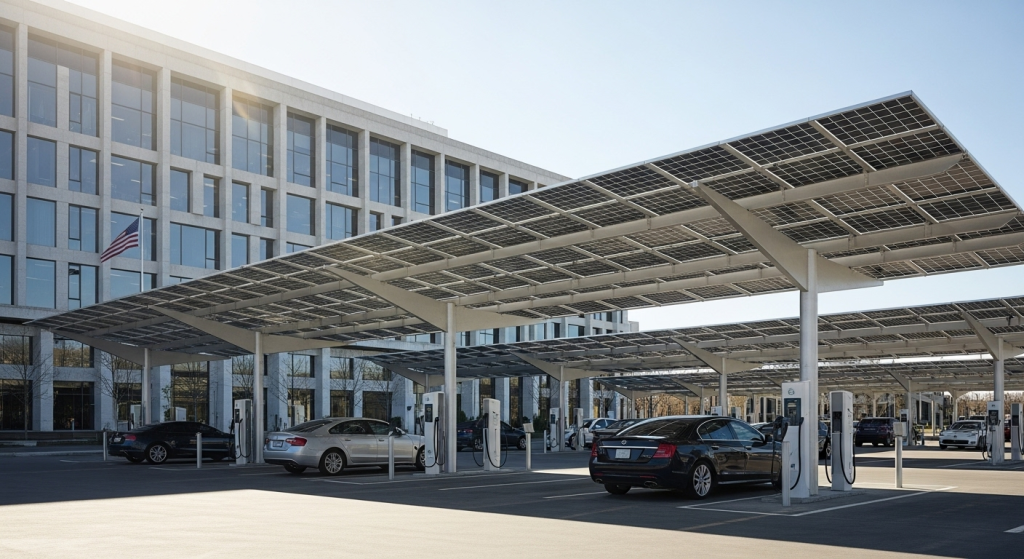
Despite political shifts & policy changes, electric vehicles (EVs) continue to gain traction across the U.S., and commercial property owners are increasingly exploring ways to stay ahead of the curve. Installing a commercial EV charging station not only attracts new customers and tenants, but also positions your business as a forward-thinking, sustainable leader. One of the first questions businesses ask when embarking on this journey is, “how much does a commercial EV charging station cost? This article breaks down the key cost factors, long-term revenue potential, and why now is the right time to consider EV chargers for businesses—especially when paired with solar and storage systems.
Understanding the Basics of Commercial EV Charging
Before diving into numbers, it’s important to understand the key components of a commercial EV charging setup. A commercial EV charger typically includes:
- Charging hardware (Level 2 or DC Fast Charger)
- Installation and permitting
- Utility upgrades (if needed)
- Networking and software services
- Ongoing maintenance and support
Each of these elements contributes to the overall cost but also adds long-term value and resilience to your property.
Average Cost Range: What to Expect
So, how much does a commercial EV charging station cost? The price can vary significantly based on charger type, site conditions, and scale of deployment:
- Level 2 Chargers: $5,000 – $12,000 per port (fully installed)
- DC Fast Chargers: $35,000 – $200,000+ per unit (fully installed)
These figures include both equipment and installation costs. Sites requiring utility upgrades or trenching may incur additional expenses. For large deployments or high-traffic locations, the price can exceed these averages, particularly for high-speed DC fast chargers. To better understand costs specific to your site, you can fill out a quick survey on SCF’s EV Charging Assessment Page and receive a tailored analysis.
Pairing EV Charging with Solar: A Smarter Investment
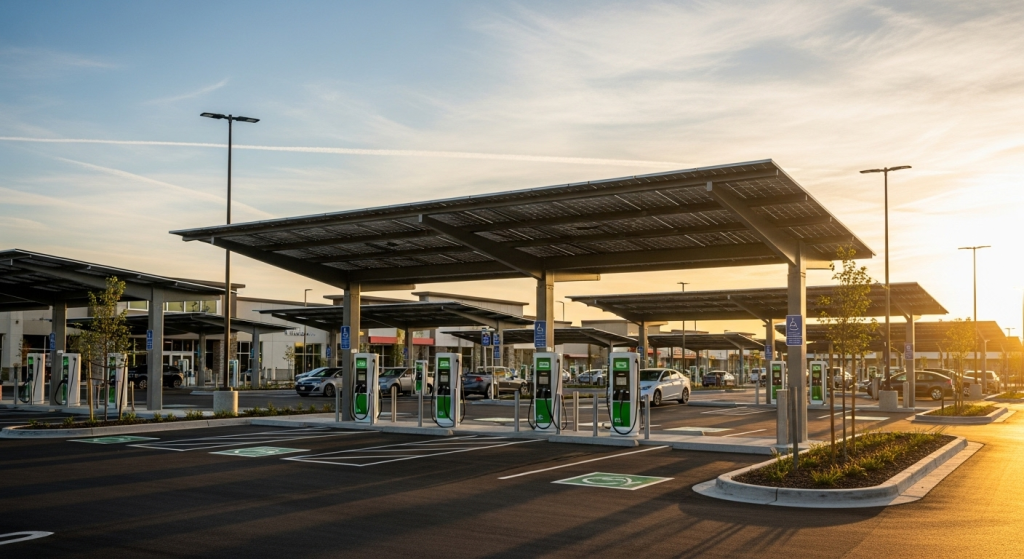
Combining commercial EV charging station installation with solar panels and battery storage offers a powerful synergy:
- Lower operating costs via solar-generated electricity
- Grid independence and peak demand management
- Better eligibility for federal and state incentives
A favorable SCF solution that integrates EV infrastructure into the property’s existing electrical service, reducing delays and avoiding the need for a new utility service
By leveraging energy storage and solar, SCF helps commercial property owners bypass the long and often unpredictable utility interconnection process, which can exceed 12 months if a new service is required. Instead, SCF’s approach accelerates deployment and reduces complexity—getting chargers operational and revenue-generating much faster. SCF helps commercial property owners implement solar + storage + EV charging under one seamless project structure. Explore our solar energy services.
Key Factors That Influence Cost
- Smart Software & Network Fees
- Many EV charging solutions for your business require software for user billing, uptime monitoring, and load balancing. These are often billed monthly.
Installation Costs & Timelines
Commercial EV charging station installation timelines can range from 3 to 16 months, depending on utility coordination and permitting. Costs generally break down into:
- Hardware: 50% of total cost
- Installation (labor + materials): 30%
- Soft Costs (design, engineering, permitting): 20%
An experienced energy partner can significantly reduce both costs and delays. SCF specializes in turnkey EV charging as a service, handling everything from site audits to final commissioning.
Financing Options: No Upfront Cost Opportunities
One of the biggest barriers to EV charger adoption is upfront capital. Fortunately, EV charging as a service models, like those offered by SCF, allow you to avoid this burden entirely. Instead of owning the equipment, property owners can lease their parking spaces and receive monthly income via revenue share from the charging stations. With SCF’s unique model, property owners pay $0 out-of-pocket, while still benefiting from:
- Increased foot traffic and tenant satisfaction
- Passive income from charging use
- Sustainable brand alignment
Learn more about our EV Charging as a Service model.
Revenue Potential & ROI
Installing EV chargers for businesses provides direct financial benefits in two major ways:
- Revenue share from SCF for charging station usage
- Increased business from EV-driving customers who prioritize destinations with charging amenities
Especially for retail centers, restaurants, and high-traffic commercial locations, offering EV charging can increase dwell time, customer satisfaction, and overall property value without requiring the property owner to manage the charging infrastructure themselves.
Why Now is the Time to Act
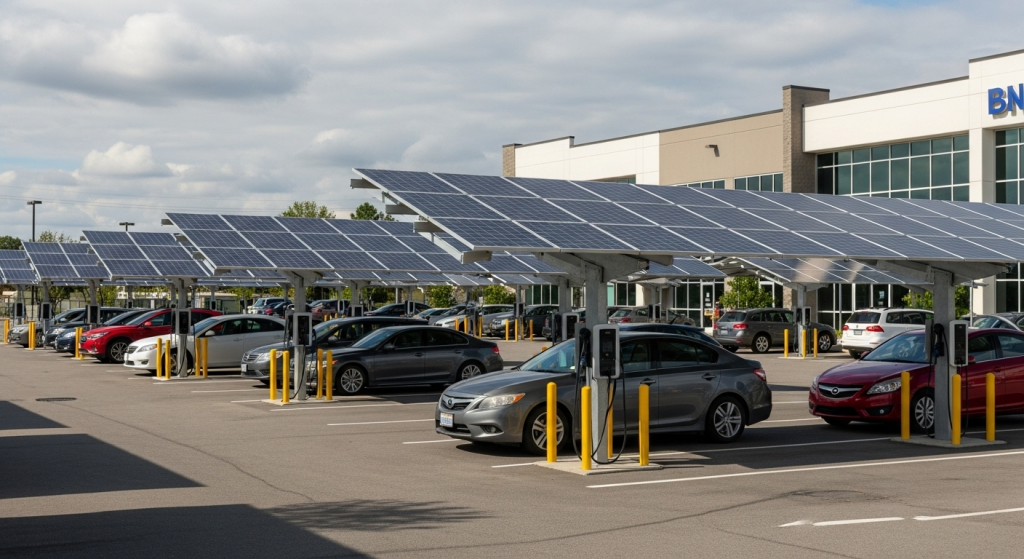
With federal and state incentives at their peak and EV adoption climbing fast, early movers stand to benefit the most. A huge sense of urgency also stems from political uncertainty. Proposed legislation such as the House’s “Big Beautiful Bill” may significantly scale back or sunset key tax credits and incentives. Acting now ensures your project qualifies under the current favorable regulatory environment. Waiting may result in longer interconnection timelines, missed funding windows, or reduced financial support. By partnering with SCF now, you can secure your commercial EV charging station without upfront capital and start generating returns immediately. and EV adoption climbing fast, early movers stand to benefit the most. Key drivers include:
- Inflation Reduction Act (IRA) tax credits
- State-level rebates and utility grants
- Increasing EV ownership and driver demand
Waiting may result in longer interconnection timelines or missed funding windows. By partnering with SCF now, you can secure your commercial EV charging station without upfront capital and start generating returns immediately.
Conclusion: Ready to Charge Forward?
So, how much does a commercial EV charging station cost? The short answer is: it depends. But with SCF, the better answer is: $0 out of pocket. Whether you’re exploring EV charging solutions for your business to attract tenants, enhance your ESG profile, or create a new revenue stream, SCF can help you navigate every step of the process. From commercial EV charger selection to turnkey installation and ongoing support, we deliver smart, sustainable infrastructure that pays off. Start your journey today by filling out our Commercial EV Charging Assessment.