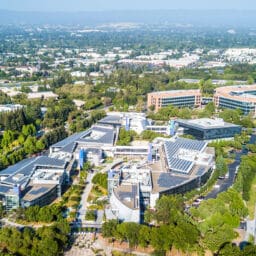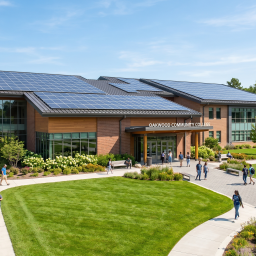

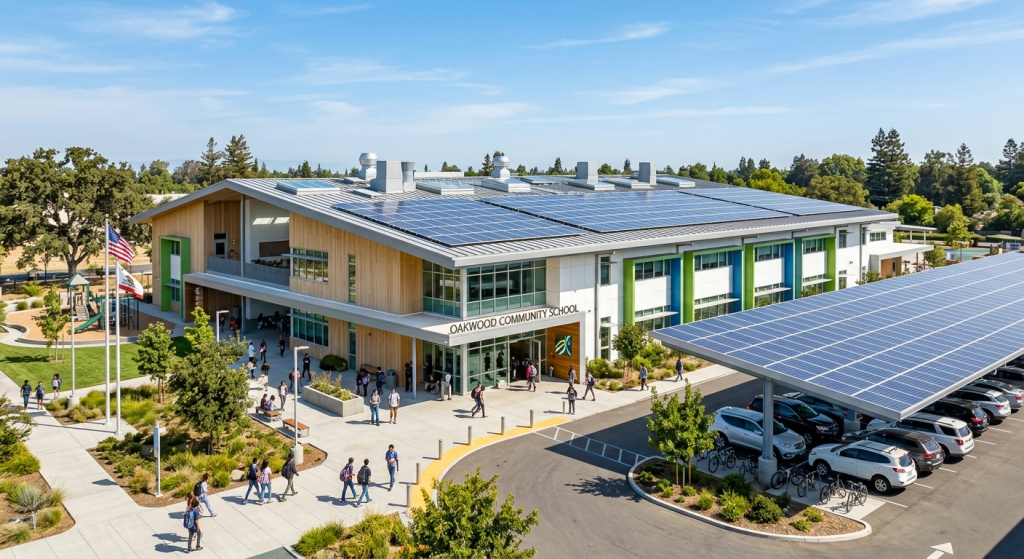
Across the nation, educational institutions are facing a dual challenge: rising operational costs and the need to inspire the next generation of environmental stewards. Schools and universities are often the heart of their communities, and as such, they are uniquely positioned to lead the transition to renewable energy. Implementing solar panels for schools is not just an environmental decision; it is a strategic financial move that liberates budget dollars for what matters most—student education.
As utility rates continue to climb, the burden on school district budgets becomes heavier. Renewable energy offers a solution that stabilizes these costs while providing a tangible learning tool for students. This guide explores the multifaceted benefits of installing solar panels for schools and how specialized financing solutions make these projects viable without tapping into essential capital funds.
The Importance of Solar Energy in Education
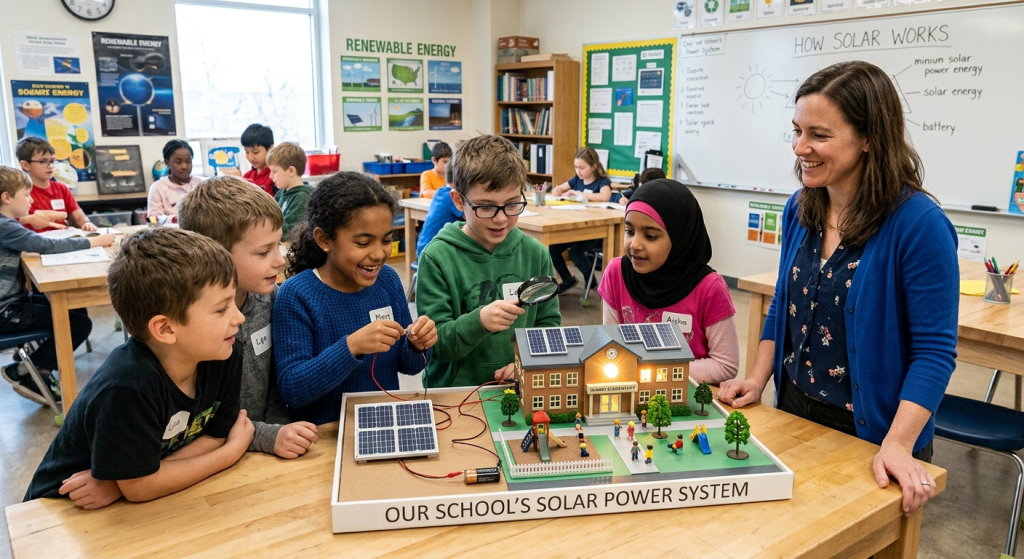
Educational institutions are high-energy consumers. From lighting classrooms and powering computer labs to heating swimming pools and cooling gymnasiums, the energy demand is significant. This makes schools prime candidates for solar energy adoption.
Beyond the immediate utility bill reduction, integrating solar infrastructure sends a powerful message. It demonstrates a commitment to sustainability and modernization. When a school installs solar panels, the technology becomes part of the curriculum. Students can monitor energy production in real-time, learning about physics, environmental science, and economics through practical, on-site examples. This “living lab” approach enriches the educational experience, preparing students for careers in the growing green economy.
Furthermore, schools often serve as emergency shelters or community hubs. By pairing solar arrays with battery storage, these institutions can provide energy resilience during power outages, ensuring safety and continuity for the surrounding community.
Benefits of Solar Panels for Schools and Universities
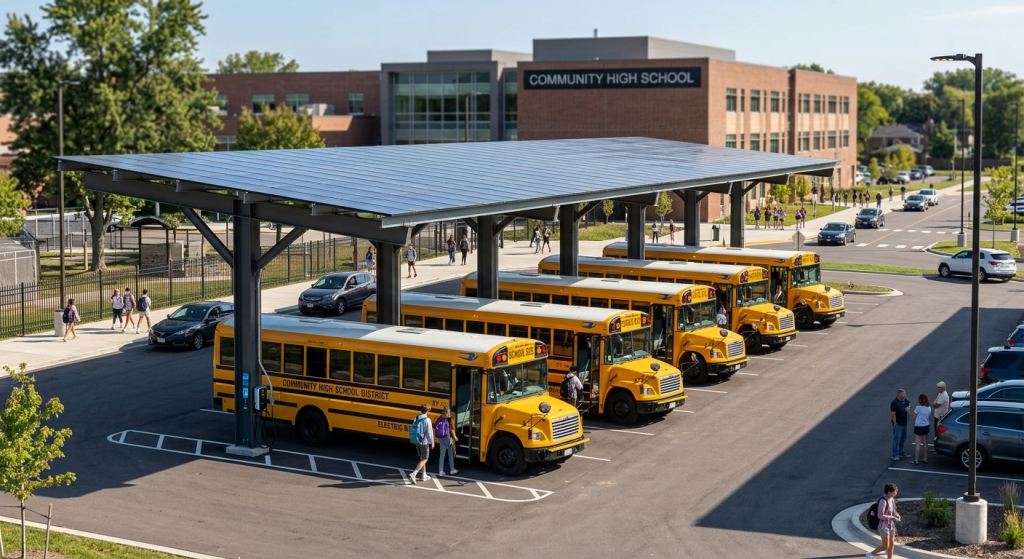
The advantages of adopting solar energy extend far beyond the initial environmental impact. For administrators and school boards, the decision to install solar panels for schools is often driven by fiscal responsibility and long-term planning.
1. Significant Financial Savings
The most compelling argument for solar is the potential for cost savings. Energy costs are typically the second-largest expense for schools, trailing only personnel salaries. By generating their own electricity, schools can drastically reduce their monthly utility bills. These savings can be redirected toward:
- Hiring new teachers and support staff.
- Purchasing updated textbooks and technology.
- Funding extracurricular programs and sports.
- Improving facilities and infrastructure.
2. Budget Predictability
Utility rates are volatile and have historically trended upward. This unpredictability makes annual budgeting difficult for school districts. Solar Power Purchase Agreements (PPAs) allow schools to lock in a fixed rate for electricity over a long term (often 20–25 years). This stability protects the district from future rate hikes, allowing for more accurate and confident financial planning.
3. Educational Opportunities
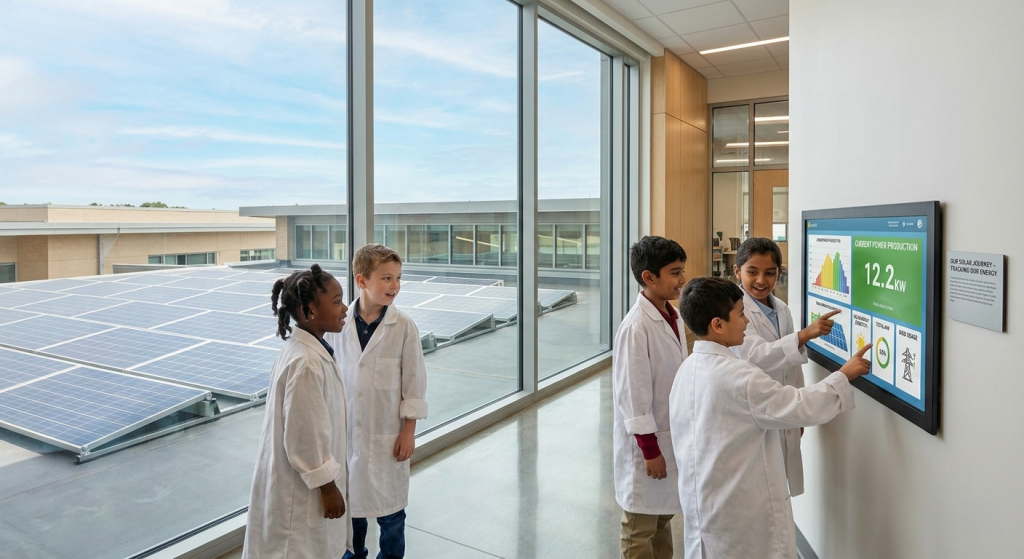
Solar installations provide hands-on learning opportunities. Science, Technology, Engineering, and Mathematics (STEM) curriculums can directly benefit from the data generated by the school’s solar system. Analyzing peak production times, calculating energy savings, and understanding photovoltaic conversion brings textbook concepts to life.
4. Community Leadership
Schools are community landmarks. When a district adopts solar panels for schools, it sets a precedent for the entire community. It signals that the institution is forward-thinking and fiscally responsible. This leadership often garners positive public relations and community support, which can be crucial when seeking approval for other levies or bonds.
Overcoming Financial Barriers for Educational Institutions
Despite the clear benefits, the upfront cost of solar installation has traditionally been a major hurdle. Most schools and universities are nonprofits or government entities, meaning they cannot utilize federal tax incentives like the Investment Tax Credit (ITC). Without these incentives, the return on investment (ROI) for a direct cash purchase takes much longer to realize.
This is where specialized financing models become essential. The Power Purchase Agreement (PPA) is the standard vehicle for solar financing for municipalities and government entities to go solar.
Under a PPA model:
- No Capital Outlay: A third-party financier (like SCF) pays for the design, construction, and maintenance of the system. The school pays nothing upfront.
- Monetizing Tax Credits: The third-party owner is a taxable entity and can claim the federal tax credits. These savings are then passed on to the school in the form of a lower electricity rate.
- Risk Mitigation: The third-party owner retains responsibility for the system’s performance and maintenance. The school simply buys the power, not the panels.
How SCF Provides Tailored solar Solutions for Schools
Sustainable Capital Finance (SCF) understands the unique constraints and opportunities within the education sector. We specialize in the “missing middle” commercial solar market, which includes schools, universities, and municipal facilities that are often overlooked by residential or utility-scale financiers.
Our approach to solar panels for schools is built on transparency, speed, and partnership. We work with local developers and Engineering, Procurement, and Construction (EPC) firms to build projects that meet the specific needs of each district.
- Customized PPA Structures: We recognize that every school district operates differently. Our PPA solutions are flexible, designed to accommodate the fiscal calendars and approval processes unique to educational boards.
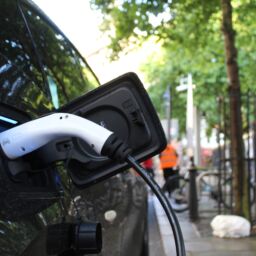
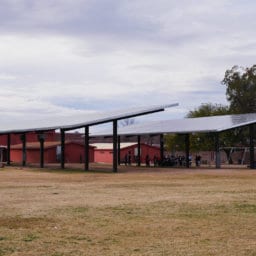
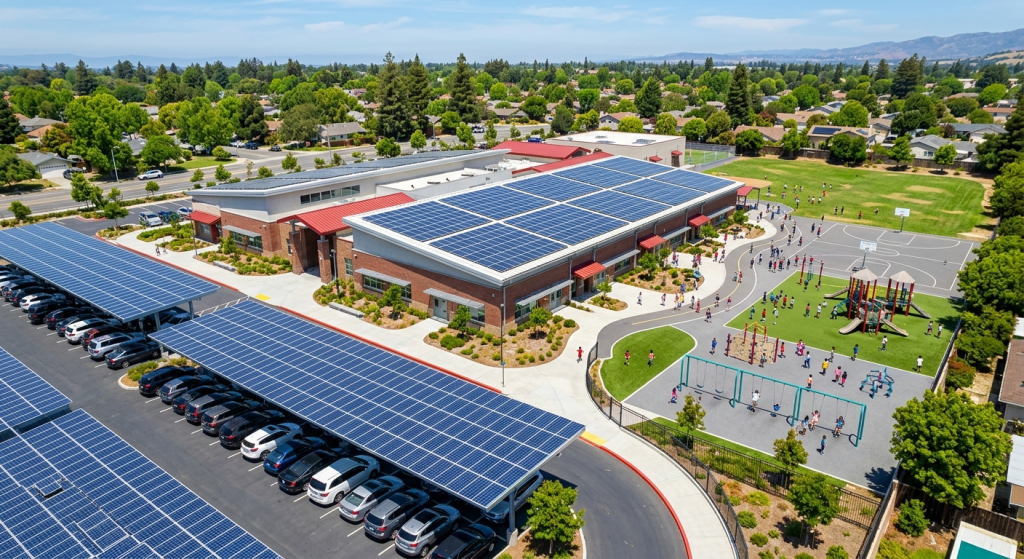
- Integration of EV Charging and Storage: Modern schools are looking beyond just rooftop solar. SCF offers bundled financing that can include solar carports, battery storage for peak demand management, and EV charging stations, all under a single PPA.
- Long-Term Partnership: An SCF PPA is a long-term relationship. We manage the asset throughout the life of the contract, ensuring the system operates at peak efficiency.
Empowering education with renewable energy is a winning proposition for administrators, taxpayers, and students alike. It turns a fixed operational cost into a source of savings and education. By leveraging third-party financing, schools can bypass the barriers of upfront costs and tax inefficiencies, unlocking the full potential of the sun.
As the demand for solar panels for schools grows, partnering with an experienced financier ensures that the transition is smooth, profitable, and enduring. Sustainable Capital Finance is dedicated to helping educational institutions lead the charge toward a sustainable future.
If your school district or university is ready to explore the benefits of solar energy without the capital expense, contact SCF today to learn how our tailored financing solutions can power your classrooms.